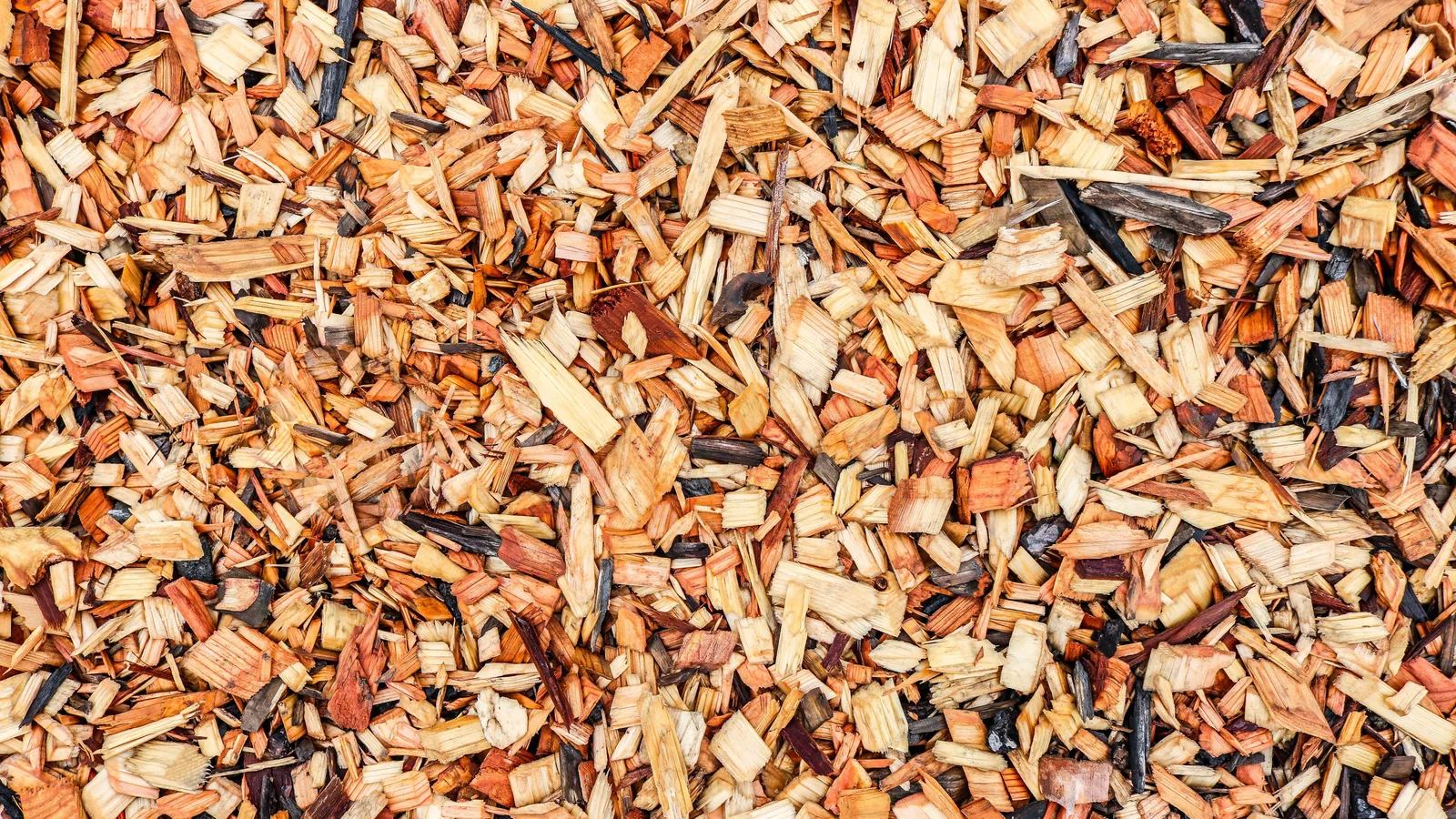
Mulch is the cheapest thing you can do to a yard that makes the biggest difference, and it's also the thing people most often get wrong — too thin to do anything, or piled up around the tree trunks in a volcano that slowly kills the tree. Here's how we do it across Forsyth County and Cherokee County, and why.
Depth first. Two to three inches is the target for most beds. Less than two and the weeds come straight through and the soil dries out in an August week; more than three or four and water and air can't reach the roots, especially over our heavy clay. When you're topping up an existing bed, measure what's already there — old hardwood mulch breaks down into a dark layer that still counts — and add only what it takes to get back to three inches.
Keep it off the trunks. The single most common mistake we see is mulch mounded against the base of a tree or a shrub. Bark that stays wet rots, insects and fungus move in, and roots grow up into the mulch instead of down into the soil. Pull the mulch back a few inches from every trunk and stem so the flare at the base is visible. A shallow ring, not a volcano.
Which mulch? Shredded hardwood is the workhorse — it knits together, stays put on a slope and breaks down into the soil. Dyed black or brown looks sharp against green and holds its color a full season; make sure it's a quality product, not ground-up pallets. Pine bark nuggets drain well and last, but float off in a hard rain on a slope. Pine straw is the North Georgia classic: cheap, easy to spread, great under pines and around acid-loving plants, but it settles fast and looks best refreshed twice a year.
When? Spring, once the soil has warmed and the last frost is past — late March into April here. That's when it does the most for weed control and moisture. A second, lighter round in the fall tidies the beds for the holidays and gives roots some insulation through the cold. Pine straw is usually a spring-and-fall job; hardwood and dyed mulch often make it on one spring application.
Prep the beds first. Mulch on top of weeds and washed-out edges looks good for a week. Pull the weeds, cut a clean spade edge so the bed holds its shape and the mulch doesn't creep onto the lawn, and — if the bed has been thin for years — consider a pre-emergent under the mulch to stop weed seeds germinating. Landscape fabric is worth it under gravel; under organic mulch it usually causes more problems than it solves.
How much do you need? Measure the bed in square feet, multiply by the depth in inches, and divide by 324 — that gives you cubic yards. A 300-square-foot bed at three inches is a little under three yards. We measure it for you, deliver it and spread it, so there's no pile on the driveway and no guessing. Call (770) 771-2556 for a mulch estimate anywhere in Forsyth County or North Georgia.